Knee osteoarthritis is one of the most common causes of joint pain and reduced mobility, especially as you age, or after years of physical activity. Many people rely on NSAIDs (non-steroidal anti-inflammatory drugs) like ibuprofen or naproxen to manage discomfort. While these medications can be effective, long-term use can cause serious health issues affecting the heart, liver, kidneys, and GI tract.
To avoid negative side effects, knee OA sufferers are turning to natural compounds like curcumin, the active component of turmeric, as an alternative solution for reducing joint pain and fighting inflammation.
Understanding Knee Osteoarthritis
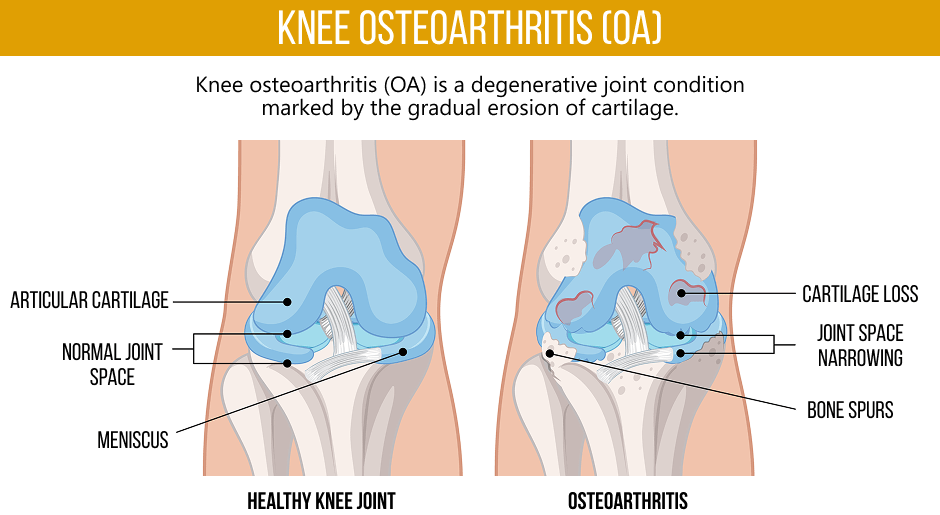
Knee osteoarthritis (OA) is a degenerative joint condition marked by the gradual erosion of cartilage. It is linked to low-grade inflammation in the joint lining, leading to changes in the surrounding bone and soft tissues. OA pain is not caused by cartilage alone, but also by inflammatory signaling molecules, synovial irritation, and mechanical stress within the joint.
According to recent research, chronic systemic inflammation is a key contributor to OA progression and symptoms. Standard care often includes exercise therapy, weight management, physical therapy, and medications like NSAIDs to help manage symptoms.
The Role of NSAIDs in Knee OA
NSAIDs work by inhibiting cyclooxygenase (COX) enzymes – key mediators of pain and inflammation. They can be helpful for short-term symptom relief in osteoarthritis. However, long-term NSAID use has been associated with gastrointestinal irritation, increased cardiovascular risk in some individuals, and kidney strain, especially in older adults or those with pre-existing conditions. Because knee OA is typically a chronic condition, many people are looking for natural strategies to help reduce reliance on daily NSAIDs.
What the Research Says About Curcumin and Knee OA
Multiple studies confirm the efficacy of oral curcumin extracts in addressing joint OA symptoms.
Pain and Function
In a randomized controlled trial, curcumin extract was compared with ibuprofen in patients with knee osteoarthritis. After four weeks, both the experimental and control groups showed similar improvements in pain and functional scores, but the curcumin group reported fewer gastrointestinal complaints.
Another randomized study of a bioavailable curcumin formulation found significant reductions in knee pain and improvements in physical function compared to placebo: “Bio-optimized Curcuma longa extract is efficient on knee osteoarthritis pain” https://pubmed.ncbi.nlm.nih.gov/31351488/
A systematic review and meta-analysis concluded that turmeric and curcumin extracts were associated with significant improvements in pain and physical function in osteoarthritis, while emphasizing variability in formulations and study quality.
Can Curcumin Replace NSAIDs?
Current research does not suggest that curcumin can completely replace prescribed medications. However, studies indicate that curcumin may help reduce pain and improve function in knee OA, which for some individuals could support a broader strategy aimed at reducing reliance on frequent NSAID use under medical guidance.

According to one study, curcumin works differently from NSAIDs. Rather than strongly blocking a single enzyme, it appears to gently influence multiple inflammatory pathways, which may help explain why curcumin has been associated with a favorable safety profile in clinical trials.
Delivery Matters: Why Injectable Curcumin Is Being Explored
One challenge with oral curcumin is limited absorption. For this reason, some integrative clinics are exploring curcumin delivered by injection or IV infusion to increase systemic availability. This approach is being investigated as a way to achieve higher circulating levels of curcumin, which may support whole-body inflammatory balance, including in joints.

Injectable curcumin is considered a nutrient-based therapy and is not classified as a medication. Research on this delivery method is still evolving, and it is typically used as part of a comprehensive wellness plan rather than a stand-alone treatment.
Lifestyle Still Plays a Central Role
Knee osteoarthritis symptoms are influenced by more than joint degeneration alone. Factors that can affect pain and inflammation include:
- Body weight and metabolic health
- Muscle strength around the knee
- Daily movement patterns
- Sleep quality
- Overall dietary inflammatory load

Lifestyle strategies such as structured exercise, weight management, and nutrient-dense diets have been shown to influence inflammation and OA symptoms. Nutrient-based therapies like curcumin may be most supportive when combined with these foundational habits.
Supporting Knee Health with an Integrative Approach
At Invita Wellness, we offer physician-guided curcumin injection therapy as part of a broader, integrative strategy for inflammation, recovery, and longevity. Many clients exploring options beyond routine NSAID use are interested in curcumin as a way to support joint comfort alongside movement therapy, nutrition, and lifestyle optimization.
If you’re curious whether curcumin injections may fit into your joint wellness plan, our team can review your goals and health history to create a personalized approach.
Contact Invita Wellness to learn more about our curcumin injection protocols and how they may support your overall knee and joint health.
Resources
Bhala, N., et al. “Vascular and upper gastrointestinal effects of non-steroidal anti-inflammatory drugs: meta-analyses of individual participant data from randomised trials.” Lancet (London, England) 382.9894 (2013): 769-779. Vascular and upper gastrointestinal effects of non-steroidal anti-inflammatory drugs: meta-analyses of individual participant data from randomised trials.
Daily, James W., Mini Yang, and Sunmin Park. “Efficacy of turmeric extracts and curcumin for alleviating the symptoms of joint arthritis: a systematic review and meta-analysis of randomized clinical trials.” Journal of medicinal food 19.8 (2016): 717-729. [PDF] liebertpub.com
Hewlings, Susan J., and Douglas S. Kalman. “Curcumin: A review of its effects on human health.” Foods 6.10 (2017): 92. [HTML] mdpi.com
Kuptniratsaikul, Vilai, et al. “Efficacy and safety of Curcuma domestica extracts compared with ibuprofen in patients with knee osteoarthritis: a multicenter study.” Clinical Interventions in aging (2014): 451-458. [PDF] tandfonline.com
McAlindon, Timothy E., et al. “OARSI guidelines for the non-surgical management of knee osteoarthritis.” Osteoarthritis and cartilage 22.3 (2014): 363-388. [HTML] sciencedirect.com
Wood, Matthew J., Rachel E. Miller, and Anne-Marie Malfait. “The genesis of pain in osteoarthritis: inflammation as a mediator of osteoarthritis pain.” Clinics in geriatric medicine 38.2 (2022): 221-238. [PDF] sciencedirect.com