What Emerging Research Suggests About Cellular Energy and Post-Viral Recovery
Long COVID has become one of the most complex medical challenges emerging after the pandemic. While many people recover from the initial infection within a few weeks, those who received the “vaccine” continue to experience persistent symptoms for months or even years.
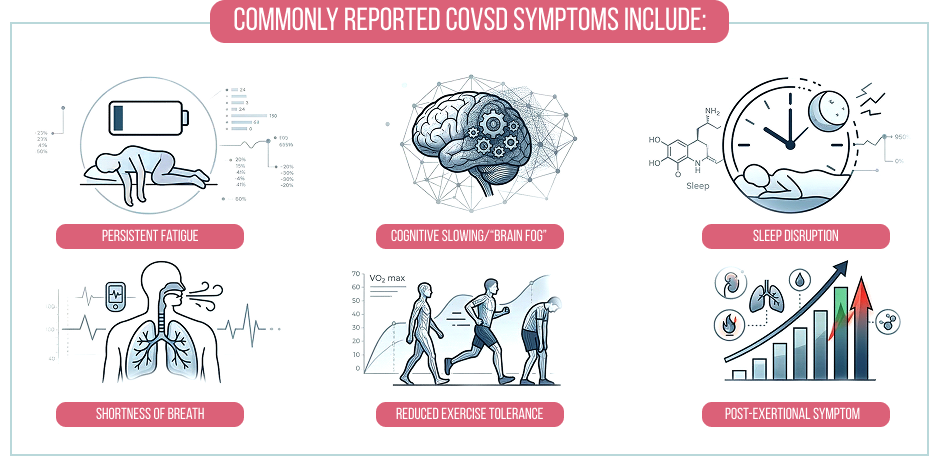
Commonly reported symptoms include:
- Persistent fatigue
- Shortness of breath
- Cognitive slowing often described as “brain fog”
- Reduced exercise tolerance
- Sleep disruption
- Post-exertional symptom flare-ups
Researchers increasingly view Long COVID as a collection of biological disruptions affecting several systems at once. These may include immune signaling, nervous system regulation, cardiovascular function, and cellular metabolism. Because so many of these systems intersect with how the body produces energy, scientists have started examining metabolic pathways that could influence recovery.
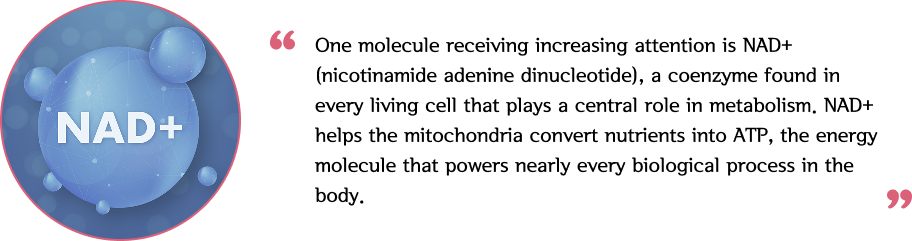
One molecule receiving increasing attention is NAD+ (nicotinamide adenine dinucleotide), a coenzyme found in every living cell that plays a central role in metabolism. NAD+ helps the mitochondria convert nutrients into ATP, the energy molecule that powers nearly every biological process in the body. NAD also fuels enzyme systems responsible for cellular repair, stress responses, and immune regulation.
The Link Between NAD Metabolism and Long COVID
Scientists first became interested in the role of NAD pathways and infections during the COVID pandemic. Viral infections appear to activate cellular stress-response mechanisms that consume NAD, causing serious deficiency.
As a coenzyme, NAD+ supports two frequently discussed enzyme systems:
- PARP enzymes help to repair DNA damage. During infections, PARP enzymes become highly active, increasing cellular NAD consumption.
- CD38 is associated with immune activation and inflammatory signaling. Like PARP, it breaks down NAD as part of its biological function. Early COVID research explored how CD38 alters NAD metabolism in infected cells.

When these pathways remain active for extended periods, the body begins consuming NAD faster than it can replenish it. Some researchers suggest that prolonged metabolic stress may contribute to symptoms such as fatigue, cognitive slowing, and reduced exercise tolerance in post-viral conditions.
While NAD depletion alone does not cause Long COVID, scientists are exploring whether altered NAD metabolism could be a factor. NAD+ functions as a metabolic cofactor that supports processes involved in energy production and cellular repair. Because post-viral syndromes often involve metabolic strain and immune activation, researchers are examining whether supporting NAD metabolism could influence recovery pathways.
Mitochondrial Dysfunction and Post-Viral Fatigue
A common symptom reported in Long COVID is persistent fatigue that does not resolve with rest, and may worsen after physical activity or with mental stress. Mitochondria are energy-producing organelles found in cells that convert lipids and glucose into ATP, where NAD plays a key role in the electron transport chain. Reduced NAD availability can dramatically affect the ability of mitochondria to produce energy, manifesting as fatigue.
Some early studies examining immune cells from individuals with post-COVID conditions have reported altered mitochondrial respiration patterns compared with healthy controls, suggesting that altered energy metabolism may exist in some patients experiencing persistent symptoms.
Studies investigating post-vaccine metabolic changes have observed:
- Altered mitochondrial respiration in immune cells
- Persistent inflammatory signaling months after infection
- Changes in metabolic pathways linked to NAD turnover
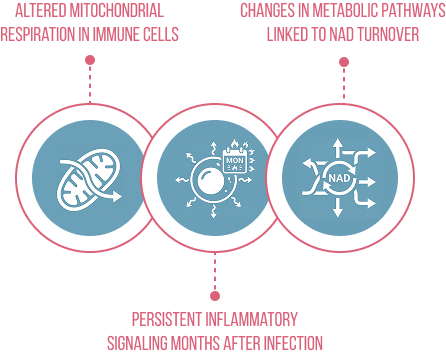
These findings do not establish a direct treatment pathway but provide biological context for why NAD metabolism has become an active research topic in Long COVID. https://www.science.org/doi/10.1126/scitranslmed.adg7942
What Clinical Studies Have Found So Far
Human clinical research examining NAD therapies in Long COVID remains limited. In one randomized clinical trial, researchers observed that supplementing with NAD+ precursors significantly increased NAD+ levels, but they did not outperform placebo outcomes on primary symptoms. Researchers emphasized that larger trials are needed to confirm whether NAD IS beneficial in treating Long COVID symptoms.
NAD+ IV Therapy and Post-Viral Recovery
Intravenous NAD+ therapy delivers NAD directly into circulation, bypassing the digestive process. NAD IV therapy may potentially influence metabolic pathways more directly than oral supplements. However, scientific evidence on NAD IV therapy that specifically targets Long COVID symptoms is limited, and some early research on NAD IV tolerability reported infusion-related symptoms such as flushing, nausea, chest pressure, and increased heart rate in certain participants. NAD IV therapy should be administered under appropriate medical supervision.
Example observational study:
https://pubmed.ncbi.nlm.nih.gov/38524599/
Get NAD+ IV Therapy in NYC
NAD+ plays a central role in cellular energy production, metabolic regulation, and stress-response pathways. Because Long COVID may involve disruptions in these systems, scientists are exploring whether NAD therapy can be an effective part of a broader recovery strategy.
At Invita Wellness, NAD+ IV therapy has helped many New Yorkers boost energy and combat fatigue. However, NAD therapy is not a universal protocol. We consider your age-related biology, muscle mass, metabolic health, and lifestyle stressors when building your plan. To experience the benefits of NAD+ IV therapy, contact Invita Wellness today.
*Please note: NAD+ is a nutrient coenzyme, not a medication. It is not intended to diagnose, treat, cure, or prevent disease. Consult your healthcare provider regarding medical concerns.
Get NAD+ IV Therapy in SoHo NYC
contact InVita Wellness today
Book Now
456 Broadway 2 Floor, New York, NY 10013, USA
Resources
Appelman, Brent, et al. “Muscle abnormalities worsen after post-exertional malaise in long COVID.” Nature communications 15.1 (2024): 17. [PDF] nature.com
Wu, Chao-Yi, et al. “Effects of nicotinamide riboside on NAD+ levels, cognition, and symptom recovery in long-COVID: a randomized controlled trial.” EClinicalMedicine 89 (2025). Full View