
Elevated serum lipid levels of LDL cholesterol and triglycerides have long been considered risk factors for cardiovascular disease – specifically coronary artery disease, where the arterial walls become coated with plaque, reducing their diameter and their ability to constrict and dilate.
Lipid management strategies typically focus on medications like statins to lower LDL cholesterol, but recent research cautions that statin use comes with a host of adverse side effects, including the development of type 2 diabetes, muscle weakness, liver toxicity, kidney disease, cataracts, strokes, and psychiatric complications.
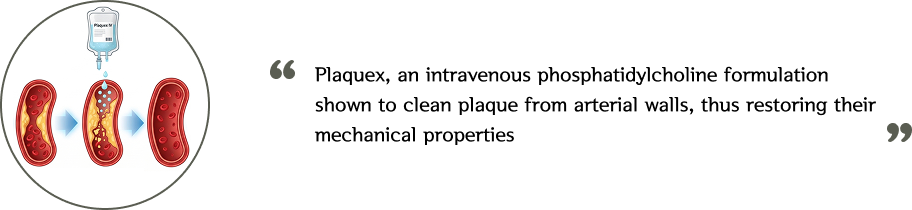
In a quest for lower-risk solutions, some clinicians and researchers have explored metabolic approaches that target lipid transport and vascular health through alternative biochemical pathways. One such medication is Plaquex, an intravenous phosphatidylcholine formulation shown to clean plaque from arterial walls, thus restoring their mechanical properties.
Learn about Plaquex, and how it can help improve arterial compliance for better blood flow and reduced risk of coronary heart disease.
The Role of Phosphatidylcholine in Plaquex Therapy
Plaquex therapy is based on phosphatidylcholine (PC), a naturally occurring phospholipid found in cell membranes and lipoproteins.
Phosphatidylcholine plays several biological roles relevant to lipid metabolism:
- PC is a structural component of lipoproteins
- PC is involved in lipid transport and metabolism
- PC participates in liver lipid processing
- PC contributes to cell membrane integrity
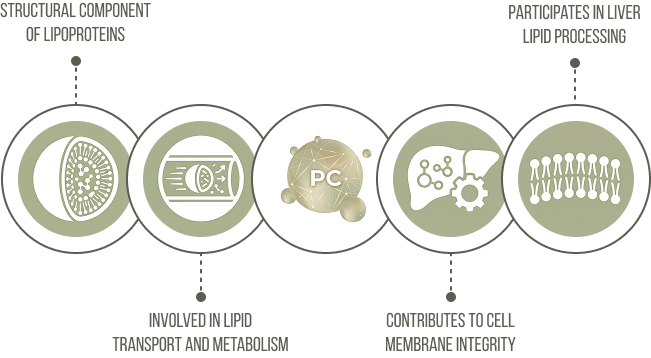
Because lipoproteins are responsible for transporting cholesterol and triglycerides through the bloodstream, researchers have investigated whether phosphatidylcholine infusions may influence lipid transport dynamics.
Some early clinical studies evaluating phospholipid therapy reported measurable changes in lipid markers after treatment cycles.
Plaquex vs. Standard Lipid-Lowering Strategies
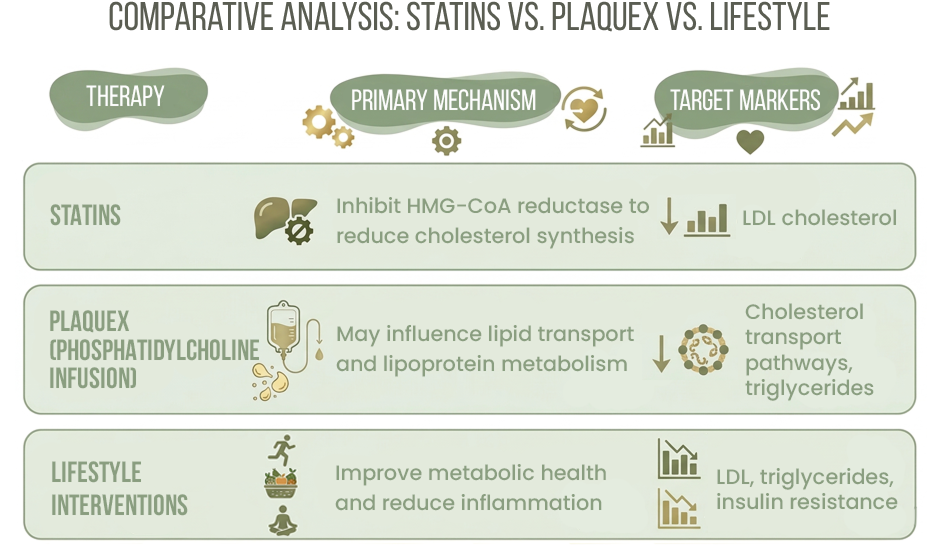
Plaquex therapy is sometimes discussed alongside conventional lipid-lowering therapies such as statins and lifestyle modifications. However, these approaches work through very different mechanisms.
| Therapy |
Primary Mechanism |
Target Markers |
| Statins |
Inhibit HMG-CoA reductase to reduce cholesterol synthesis |
LDL cholesterol |
Plaquex
(phosphatidylcholine infusion) |
May influence lipid transport and lipoprotein metabolism |
Cholesterol transport pathways, triglycerides |
| Lifestyle interventions |
Improve metabolic health and reduce inflammation |
LDL, triglycerides, insulin resistance |
Because of these differences, some clinicians recommend Plaquex as a complementary metabolic therapy, especially for patients seeking overall improvements in vascular health. Plaquex is generally not considered a substitute for current guideline-based cardiovascular treatments.
Use of Plaquex in Cardiovascular Prevention Programs
Integrative cardiovascular medicine sometimes incorporates Plaquex into programs promoting arterial health and combatting atherosclerosis.
Such programs typically combine several strategies:
- Metabolic risk assessment
- Lipid monitoring
- Nutrition and lifestyle interventions
- Cardiovascular imaging when appropriate
- Complementary IV therapies such as phospholipid infusion
Clinics offering Plaquex therapy often emphasize collaboration with patients’ existing healthcare providers.
Who Is a Candidate for Plaquex IV Therapy?
Early research suggests that Plaquex infusions may influence cholesterol transport pathways and triglyceride metabolism. Plaquex is best viewed as a complementary metabolic therapy within a broader cardiovascular prevention strategy, rather than a replacement for established lipid-lowering treatments.
Plaquex may be suitable for individuals who:
- Are managing elevated cholesterol or triglycerides
- Want to support vascular health and blood flow
- Are looking for an integrative, metabolic approach to cardiovascular wellness
- Prefer medically supervised IV supportive care
A consultation with a qualified clinician can help determine whether Plaquex therapy is compatible with your doctor’s cardiovascular prevention strategy.
Plaquex IV Therapy Safety Considerations
Plaquex IV therapy is a generally safe invasive procedure that should always be performed in a clinical setting. When properly administered, undesirable side effects are minimal and vary from one patient to the next.
Potential side effects include:
- Sensations of warmth or flushing
- Mild post-treatment nausea
- Fatigue following treatment
- Temporary chest discomfort
These effects are usually transient but should not be completely ignored. Notify your clinician if you experience adverse effects from your IV therapy.
Patients with cardiovascular risk factors, or those being treated with pharmaceuticals, should consult their physician before beginning any IV therapy program.
* Patients interested in Plaquex therapy should discuss their cardiovascular risk profile and treatment options with their doctor.
Optimize Your Vascular Health in SoHo NYC
Discover how Plaquex IV therapy may support your metabolic and cardiovascular wellness goals at InVita Wellness. Our clinical team will evaluate your lipid profile, cardiovascular risk factors, and overall metabolic health to determine whether Plaquex therapy is a compatible addition to your personalized wellness strategy.
Optimize Your Vascular Health in SoHo NYC
contact InVita Wellness today
Book Now
456 Broadway 2 Floor, New York, NY 10013, USA
Resources
Khatiwada, Nisha, and Zhongkui Hong. “Potential benefits and risks associated with the use of statins.” Pharmaceutics 16.2 (2024): 214..[HTML] mdpi.com
Owens, Camille V., et al. “A Defined, Plant-Based Diet and Other Integrative Therapies Improve Functional Status and Ejection Fraction While Reducing Medications in Patients With Heart Failure: A Case Series.” American Journal of Lifestyle Medicine (2024): 15598276241281475