Chronic systemic inflammation is a primary marker of metabolic syndrome – a cluster of symptoms that includes inflammation, elevated blood sugar, insulin resistance, and cardiovascular disease. Tackling chronic inflammation is the first step toward getting your metabolism back on track, to boost energy, manage weight, extend longevity, and improve your overall health.
Learn about the causes and symptoms of chronic inflammation, its role in metabolic syndrome, and how NAD+ IV therapy combined with lifestyle modifications can help reverse and eliminate it.
Chronic Inflammation and Metabolic Syndrome
Chronic systemic inflammation is a persistent, low-level hyperactivation of the immune system, affecting metabolic processes throughout the body. Unless steps are taken to reverse it, low-level inflammation can last for months or even years, creating a cascade of metabolic issues that deteriorate your health over time. Inflammation is considered to be a chief driver of most modern chronic diseases.
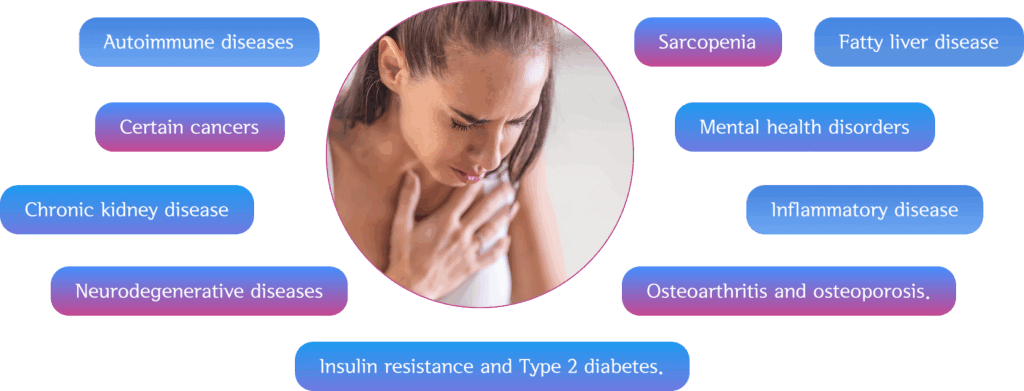
Chronic inflammation is a key contributor to metabolic disorders such as:
- Atherosclerosis, an inflammatory disease of the artery wall.
- Insulin resistance and Type 2 diabetes.
- Alzheimer’s and neurodegenerative diseases.
- Depression and mental health disorders.
- Certain cancers.
- Autoimmune diseases like lupus, psoriasis, and rheumatoid arthritis.
- Fatty liver disease.
- Osteoarthritis and osteoporosis.
- Chronic kidney disease.
- Sarcopenia (muscle wasting).
Causes and Symptoms of Chronic Inflammation
Chronic inflammation is a disease of modern living, where a variety of factors combine to overactivate the immune system. The good news is that chronic inflammation can be completely reversed without drugs, simply by changing your daily habits.
Factors that contribute to chronic inflammation include:
- Obesity, especially visceral fat accumulation, which in turn releases pro-inflammatory cytokines, creating a vicious cycle of inflammation.
- Nutrient-poor diet high in processed foods, refined carbohydrates, and seed oils.
- Smoking and excessive alcohol consumption.
- Chronic stress that dysregulates the immune system and elevates cortisol.
- Lack of regular physical activity.
- Insufficient or irregular sleep habits, and conditions like apnea.
- Unhealthy gut microbiome.
- Exposure to environmental toxins in air, food and water.
- Inadequate exposure to natural sunlight.
Symptoms of chronic systemic inflammation include:
- Persistent fatigue and lack of energy to perform daily tasks.
- Insomnia and disrupted sleep.
- Generalized body aches and chronic joint pain.
- Anxiety, depression, and brain fog.
- Digestive problems such as constipation, diarrhea, or acid reflux.
- Difficulty managing body weight.
- Skin disorders such as acne, psoriasis, and rashes.
- Frequent respiratory infections.
- Headaches and other neurological symptoms.
NAD+ and Chronic Inflammation
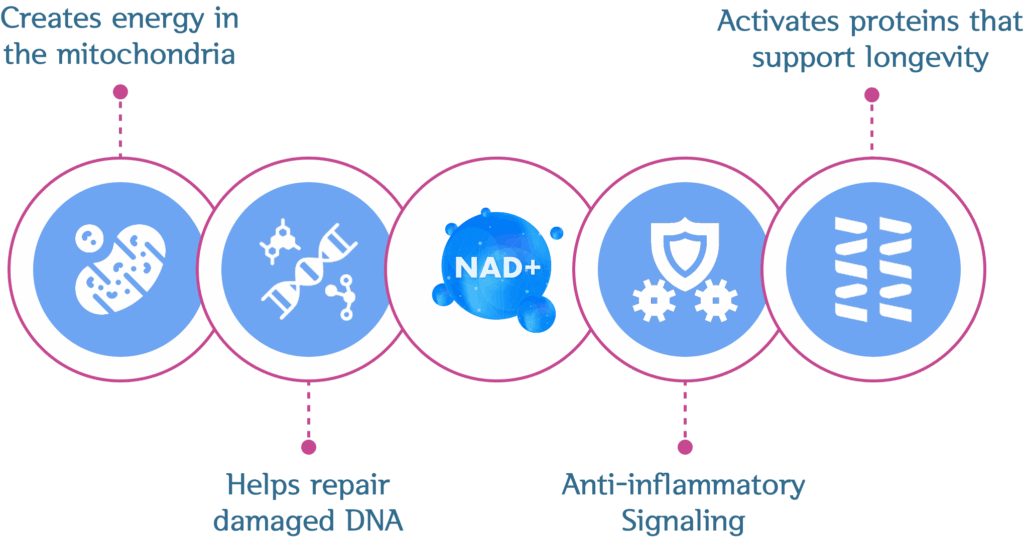
NAD+ (nicotinamide adenine dinucleotide) is a critical coenzyme found in every cell of your body. It plays a key role in energy production, DNA repair, sirtuin activation, and anti-inflammatory signaling. NAD+ is critical for mitochondrial function, and low levels of NAD+ are strongly associated with accelerated aging.
NAD+ is dramatically depleted by chronic inflammation, while at the same time, low NAD+ is a key driver of inflammation, creating a recurring cycle. Restoring depleted NAD+ can help to turn off the inflammatory response and restore metabolic balance, especially when supported by basic lifestyle changes.
While your body makes NAD+ from dietary sources, modern diets are often deficient in NAD+ precursors, and your body naturally makes less NAD+ as you age. Supplementing with NAD+ precursors can help to make up for dietary deficiencies, halting the cycle of inflammation and tapping the brakes on aging.
NAD+ precursors are available as oral supplements, but they vary broadly in quality and potency, and their potency can be dramatically reduced during the digestive process. When delivered by IV infusion, NAD+ and its precursor, nicotinamide riboside (NR) maintain their potency by bypassing the GI tract, replenishing your cells with vital nutrients that combat inflammation.
Benefits and Timeline of NAD+ IV Therapy
| Timeline |
What’s Happening |
You May Notice |
| Day 1 |
Cellular NAD+ levels rise |
Mental clarity, calmer nervous system |
| Week 1–2 |
DNA repair and mitochondrial activation |
More energy, reduced fatigue, fewer crashes |
| Week 3–4 |
Inflammation and oxidative stress shift |
Less pain, better sleep, faster recovery |
| Week 8+ |
Metabolic resilience and cellular renewa |
Stronger immunity, improved focus & mood |
Lifestyle Matters
Generally speaking, chronic inflammation and related metabolic disorders are driven by lifestyle factors, and most if not all are reversible. While supplementing with NAD+ and its precursors can help to reduce inflammation, it cannot overcome harmful habits or behaviors that perpetually trigger it.
Positive lifestyle factors that reverse systemic inflammation include:
- Obtaining and maintaining a healthy body weight, and reducing visceral (belly) fat.
- Getting regular exercise – a simple daily walking program can have a profound effect on systemic inflammation.
- Optimizing your sleep environment by sleeping in a cool, dark room, turning off screens 30 minutes before bed, and going to bed at the same time every night.
- Adopting an anti-inflammatory diet that includes fresh whole produce and protein from healthy animals. Eliminate processed and fast foods, sugar, seed oils, and refined carbohydrates.
- Manage stress with deep breathing, stretching, exercising, and spending time in nature. Hobbies like knitting, reading, crafts and puzzles can also help alleviate stress.
Positive lifestyle factors that reverse systemic inflammation
Making lifestyle changes and supplementing with NAD+ can result in quick relief of chronic inflammation, with symptoms typically improving within days to weeks.
What Our Clients Say About NAD+ IV Therapy
Invita Wellness is devoted to providing our clients with the latest innovations in health, wellness and longevity. NAD+ and Niagen Plus IV therapy are getting rave reviews from our loyal clients who want to optimize their health and performance.
1. 42-year-old CEO recovering from burnout:
“NAD+ restored my energy and mental sharpness. I feel clear and strong again.”
2. Post-Covid / Long-fatigue client:
“My brain fog and joint pain cleared up faster than anything else I’ve tried.”
3. Wellness-focused athlete:
“Recovery between workouts is night and day. No more late-in-the-day crashes.”
If you’re ready to boost your health
contact InVita Wellness today
Book Now
456 Broadway 2 Floor, New York, NY 10013, USA
Peptide Therapy FAQs
Can NAD+ help reverse chronic systemic inflammation?
Yes, many clients supplement with NAD+ as part of an integrated strategy for inflammation reduction, immune support, metabolic balance, and energy restoration.
Do I need bloodwork to start NAD+ IV therapy?
Certain people should avoid NAD+ IV therapy, including:
- Pregnant and nursing mothers
- People with severe liver of kidney issues
- People with active cancer
- People on certain medications (consult your doctor)
How many NAD+ IV therapy sessions will I need?
Many clients start with a loading protocol (3–6 IVs), then shift into monthly or bi-weekly support.
*Disclaimer: NAD+ therapy at InVita Wellness is offered for general wellness and longevity support. It is not intended to diagnose, treat, or cure medical conditions. All services are provided under medical supervision with products sourced from licensed US pharmacies. Always consult your healthcare provider to determine if NAD+ therapy is right for you.
Resources
Novak, Elizabeth A., et al. “Epithelial NAD+ depletion drives mitochondrial dysfunction and contributes to intestinal inflammation.” Frontiers in Immunology 14 (2023): 1231700.
Epithelial NAD+ depletion drives mitochondrial dysfunction and contributes to intestinal inflammation
Poljsak, Borut, and Irina Milisav. “NAD+ as the link between oxidative stress, inflammation, caloric restriction, exercise, DNA repair, longevity, and health span.” Rejuvenation research 19.5 (2016): 406-413.
Full View
Zhao, Yao, et al. “NAD+ improves cognitive function and reduces neuroinflammation by ameliorating mitochondrial damage and decreasing ROS production in chronic cerebral hypoperfusion models through Sirt1/PGC-1α pathway.” Journal of Neuroinflammation 18.1 (2021): 207.
NAD+ improves cognitive function and reduces neuroinflammation by ameliorating mitochondrial damage and decreasing ROS production in chronic cerebral …