Reviewed by the InVita Wellness Clinical TeamInVita Wellness, SoHo, New York City

You train consistently, you eat well, and somewhere in your forties or fifties the results feel harder to hold onto. Age-related changes in hormones, sleep, recovery and activity can make changes in body composition more noticeable over time. The hormonal signals supporting muscle and fat metabolism begin declining from around 30, though how much that shows up varies considerably from one person to the next.
Peptides for muscle growth come up constantly in longevity and healthy aging settings, and the category is widely misunderstood. Not all of them do the same thing. Some work through your hormone signaling system. Others target tissue repair. They have different mechanisms, different goals, and very different levels of clinical evidence behind them.
What follows sorts the compounds by what they actually do, how strong the human evidence is for each, and where each one sits with the FDA. If you are researching peptide therapy for body composition, the evidence tier table is probably the fastest way in.
InVita Wellness has been serving clients in SoHo for more than ten years, and the framing here is preventive rather than corrective. Body composition work in midlife is a long horizon project, not a cycle.
Quick Answer
- Peptides are short amino acid chains that signal specific physiological responses. For muscle growth and body composition the relevant ones split into two groups that are often confused.
- Growth hormone secretagogues, meaning CJC-1295, ipamorelin and tesamorelin, work through the hormonal axis that supports lean tissue and fat metabolism.
- Tissue repair peptides, meaning BPC-157 and TB-500, do not stimulate growth hormone or drive muscle protein synthesis at all.
- Evidence quality runs from FDA approved for one specific indication, in the case of tesamorelin, down to almost entirely preclinical for BPC-157 and TB-500.
- No peptide replaces training, nutrition or sleep, all of them are prohibited in tested sport, and candidacy requires clinical assessment rather than self-diagnosis.
Medical Disclaimer
This article is intended for educational purposes only. It does not constitute medical advice, a diagnosis, or a treatment recommendation. Individual circumstances vary. All clinical decisions should be made in consultation with a qualified physician following appropriate assessment.
What Peptide Therapy Can and Cannot Support
Peptide therapy at InVita may be considered after clinical evaluation, for adults working toward one of the following.
- Muscle growth and definition alongside structured resistance training
- Improved body composition, meaning reducing fat while preserving or building lean mass
- Faster recovery between training sessions
- Training consistency where a chronic injury has become the barrier
- Age related body composition management, the gradual drift toward less muscle and more fat from the thirties onward
- Visceral fat, in the narrow context where tesamorelin is FDA approved, meaning HIV-associated lipodystrophy. This is not a class-wide peptide benefit
What Peptide Therapy Can and Cannot Support
Muscle Growth & Definition
Body Composition & Lean Mass
Enhanced Athletic Recovery
Injury Rehabilitation & Resilience
Age-Related Composition Support
Targeted Visceral Fat Management
What it cannot do belongs in the same breath. No peptide substitutes for progressive resistance training, adequate protein or sleep, and every mechanism described below works downstream of those. How much of any change persists after a protocol ends varies by compound, by endpoint and by individual, and should be discussed as part of planning rather than assumed either way.
What it cannot do belongs in the same breath. No peptide substitutes for progressive resistance training, adequate protein or sleep, and every mechanism described below works downstream of those. How much of any change persists after a protocol ends varies by compound, by endpoint and by individual, and should be discussed as part of planning rather than assumed either way.
Why Body Composition Shifts After 45
Growth hormone is released in pulses, the largest during deep sleep, and it stimulates IGF-1 production in the liver. GH and IGF-1 signaling is involved in protein metabolism, body composition, and tissue growth and repair. After the third decade, growth hormone secretion declines by roughly 15 percent per decade. Peak secretion at puberty runs around 150 micrograms per kilogram per day and falls to about 25 by age 55.
That decline is mostly a loss of nocturnal pulse amplitude rather than a change in how often pulses occur, which is why sleep quality and growth hormone output are so tightly linked and why disrupted sleep accelerates the same trend.
One caution belongs alongside that. The changes of later adulthood resemble those seen in diagnosed growth hormone deficiency, but resemblance is not causation, and the extent to which declining growth hormone causes age related body composition change remains genuinely uncertain in the literature.
What changes for women, and why the timing differs
The growth hormone decline above runs on roughly the same schedule for everyone. What differs is what else is happening at the same time. Through perimenopause and after menopause, falling estrogen removes a signal that supports muscle protein synthesis and influences where fat is stored, which is why many women see lean mass drop and abdominal fat rise over a compressed few years rather than gradually across two decades. Age related muscle loss is not a male problem that women also have. It arrives on a different timeline and it is often steeper.
Through perimenopause and after menopause, falling estrogen removes a signal that supports muscle protein synthesis and influences where fat is stored, which is why many women see lean mass drop and abdominal fat rise over a compressed few years rather than gradually across two decades.
Practically, that means the same lab panel reads differently depending on where someone sits relative to that transition, and it means resistance training and protein intake carry more weight in the plan rather than less. It also means a hormonal picture that includes the reproductive axis, not only IGF-1 and fasting insulin.
Peptides for Muscle Growth at a Glance
Peptide
Primary goal
How it works
Human evidence
Key limitation
CJC-1295
Lean mass, fat metabolism
GHRH analog, signals the pituitary to release growth hormone
Phase 1 trials, hormone endpoints only
Two versions, DAC and no-DAC, behave differently
Ipamorelin
GH support, lean mass, recovery
Selective ghrelin receptor agonist, triggers a GH pulse
One phase 2 trial, in a different indication
No efficacy trial for body composition
CJC-1295 + ipamorelin
Body composition, recovery
Two pathways stimulated together
None for the combination specifically
Class pharmacology, not pair evidence
BPC-157
Tissue repair, injury recovery
Studied primarily in preclinical models of muscle, tendon and connective-tissue injury
One clinical study against 35 preclinical
Does not build muscle
TB-500
Recovery, overuse injury
Binds actin, supports cell migration and repair
Early, predominantly preclinical
Does not build muscle
Tesamorelin
Visceral fat, body composition
Stabilized GHRH analog, the only approved compound here
Phase III RCTs with CT endpoints
Approval covers HIV lipodystrophy only
The Compounds Explained
CJC-1295
CJC-1295 is a synthetic analog of the hypothalamic signal that instructs the pituitary to release growth hormone. In two randomized placebo-controlled trials in healthy adults, a single dose produced dose-dependent growth hormone increases of 2 to 10 fold lasting 6 days or more, and IGF-1 increases of 1.5 to 3 fold lasting 9 to 11 days. No serious adverse reactions were reported.
One distinction matters more than any other here and most articles skip it. CJC-1295 as studied in the published trials carries a Drug Affinity Complex, binds albumin, has a half-life of roughly 6 to 8 days and is dosed weekly, producing sustained elevation. A separate compound, tetrasubstituted GRF (1-29), commonly called Modified GRF (1-29), clears in about thirty minutes and is dosed daily, producing a pulse. It is widely marketed as CJC-1295 without DAC, which is a commercial naming convention rather than a precise one. Most combination blends use the short-acting compound while the trial data above is on the long-acting one, so if you are prescribed a blend, ask which compound it actually contains.
Ipamorelin
Ipamorelin mimics ghrelin, triggering short targeted pulses of growth hormone release. Its clinical advantage is selectivity. Raun and colleagues in 1998 showed it releases growth hormone without raising cortisol, which works against muscle growth, or prolactin, even at doses far above the effective range. That work was done in swine and rat models rather than in humans.
Its most rigorous human study is Beck et al. 2014, a phase 2 randomized placebo-controlled trial in 87 adults, and it was in postoperative ileus rather than body composition. It did not meet its primary endpoint. So the pharmacology is clean and well characterized, and the human outcome record is close to empty.
CJC-1295 and ipamorelin together
CJC-1295 extends the underlying signal for growth hormone release. Ipamorelin triggers the pulse. Stimulating both the GHRH and ghrelin pathways at once produces a larger response than either alone, which is a well documented property of the pituitary and the honest basis for the pairing.
Being precise about the limit of that claim, the synergy is established for the class. No published human trial has tested this specific pair against either compound alone or against placebo. What exists is class-level pharmacology and clinical experience, neither of which substitutes for trial evidence on this specific pairing.
BPC-157
BPC-157 is a partial sequence of a protein found in gastric juice, studied for tissue healing rather than for muscle growth directly. The value proposition is removing a recovery bottleneck where training is limited by injury or persistent strain. A 2025 systematic review in HSS Journal screened 544 articles and included 36. Thirty-five were preclinical. One was clinical.
The animal data really is consistent across muscle, tendon, ligament and nerve injury models. That consistency is not the same as demonstrated effectiveness in humans, and it should not be read as such.
TB-500
TB-500 is a synthetic fragment of Thymosin Beta-4, which binds intracellular actin and accelerates fibroblast and endothelial cell migration. It comes up most often around overuse injury and generally impaired recovery rather than a single localized problem. Human evidence exists in wound healing and cardiac repair contexts. Direct human evidence for training recovery is limited and predominantly preclinical.
Tesamorelin
Tesamorelin stimulates growth hormone release similarly to CJC-1295 but holds a different position, as the only compound here with an FDA approval. That approval covers visceral fat reduction in HIV-associated lipodystrophy. In the pivotal trial of 412 participants, visceral adipose tissue fell 15 percent on tesamorelin against a 5 percent rise on placebo over 26 weeks, measured by CT.
Two things follow. It carries the strongest evidence tier of anything in this article. And its approved indication is narrow, meaning reduction of excess abdominal fat in HIV-infected adults with lipodystrophy. Use for general body composition would be off-label, and efficacy in otherwise healthy adults has not been established. Worth adding that its label describes the effect as weight neutral and states it is not indicated for weight loss. It redistributes fat rather than reducing body weight.
Repair Versus Body Composition, the Distinction That Matters
BPC-157 and TB-500 do not stimulate growth hormone release and they do not drive muscle protein synthesis. They are discussed primarily in the context of tissue-repair research, but human evidence for injury recovery remains limited.
CJC-1295, ipamorelin and tesamorelin are body composition peptides. They work through the hormonal axis that supports lean tissue development and fat metabolism.
Assuming all muscle building peptides work the same way is the most common misconception in this space. A protocol that matches the tool to the goal starts by establishing which problem is actually present, which is also where recovery and athletic protocols diverge from body composition work.
Peptides Are Not Steroids, Briefly
The difference is mechanical rather than semantic. Anabolic steroids introduce synthetic testosterone-like compounds from outside the body and bypass the regulatory system entirely, which is why they suppress endogenous production. Growth hormone secretagogue peptides signal your own pituitary to release more of its own growth hormone, inside the existing feedback architecture, with somatostatin regulation intact.
One thing the two categories do share is worth stating plainly. In tested sport both are prohibited, so peptides are not a compliant alternative for anyone who competes. If you want the full comparison, we have written separately on the difference between peptides and steroids, including the safety and muscle growth side of it.
Evidence and Regulatory Status
Evidence tier
Compounds
What that means
Regulatory position
FDA approved, one indication
Tesamorelin
Phase III RCTs with CT measured endpoints
Approved for HIV lipodystrophy. Off label for everything else
Human hormone-endpoint data
CJC-1295
Trials measured GH and IGF-1, not body composition outcomes
Not approved. Advisory committee voted against 503A listing in December 2024
Limited human, strong preclinical
Ipamorelin
One phase 2 trial in a different indication, extensive animal work
Not approved. Advisory committee voted against 503A listing in October 2024
Preclinical with minimal human
BPC-157, TB-500
35 preclinical studies to 1 clinical in the most recent systematic review
Not FDA approved. Considered by PCAC in July 2026. FDA staff proposed that the substances not be included on the 503A Bulks List; the committee voted to recommend inclusion. Final regulatory status should be confirmed at publication
Worth stating plainly
Tesamorelin is FDA approved for a specific indication and may be prescribed off-label when clinically appropriate. The other compounds discussed here are not FDA-approved drugs, and their regulatory and compounding status must be considered separately. Off-label describes the use of an approved drug for an unapproved indication, so it is not an accurate description of an unapproved compound.
Long-term safety data for ongoing peptide use in otherwise healthy adults is still being established.
How Peptides Are Administered at InVita
Body composition peptides prescribed at InVita Wellness are not given as intravenous drips. When prescribed, subcutaneous peptides are administered according to the physician-directed protocol, typically by the client at home after appropriate instruction. The injections are small and shallow, using a fine-gauge needle, similar in method to insulin administration. Most people report minimal discomfort. This is peptide injection therapy rather than an infusion protocol.
Body composition peptides prescribed at InVita Wellness are not given as intravenous drips. When prescribed, subcutaneous peptides are administered according to the physician-directed protocol, typically by the client at home after appropriate instruction. The injections are small and shallow, using a fine-gauge needle, similar in method to insulin administration. Most people report minimal discomfort. This is peptide injection therapy rather than an infusion protocol.
InVita serves as the hub for everything around the protocol, meaning in-person biomarker assessment, blood draws, physician consultations, body composition review and ongoing monitoring. The subcutaneous protocol itself is carried out at home on a schedule your physician designs.
Where IV nutrient therapy fits
IV nutrient therapy delivers selected nutrients intravenously and may be discussed separately based on individual clinical needs. The Athletic Performance IV drip is one such option, containing amino acids, B-complex vitamins and other micronutrients.
It is a separate supportive service rather than part of a peptide protocol, and whether it is worth considering is an individual question for your provider rather than a default addition.
Who Is a Candidate
Assessment may be worthwhile if several of the following describe you.
- You are in your forties, fifties or sixties and noticing body composition changes despite consistent training and nutrition
- You have hit a plateau that does not respond to further lifestyle adjustment
- Recovery has slowed, soreness lingers and training performance has dropped
- A chronic tendon, joint or muscle injury has become a genuine training barrier
- You are managing the fundamentals well and are looking for guided optimization on top of that
- Lab work has already shown a measurable decline in relevant hormonal markers
- You are moving through perimenopause or are postmenopausal and have watched lean mass fall and abdominal fat rise faster than lifestyle alone explains
- You are thinking in terms of healthy aging and metabolic wellness over years rather than a single cycle, and want the work monitored rather than guessed at
Target Candidates for Peptide Evaluation
Midlife Body Composition Shift
Noticing body composition changes in your 40s, 50s, or 60s despite consistent training and nutrition.
Advanced Optimization Ready
Maintaining solid lifestyle fundamentals and seeking guided optimization on top of them.
Stubborn Fitness Plateau
Hitting a plateau that no longer responds to further lifestyle adjustments.
Documented Hormonal Decline
Having lab work that confirms a measurable decline in relevant hormonal markers.
Impaired Exercise Recovery
Lingering soreness, slowed recovery, and a noticeable drop in training performance.
Menopausal Metabolic Shift
Experiencing rapid lean mass loss and abdominal fat gain during perimenopause or postmenopause.
Chronic Joint or Muscle Injury
Managing a persistent tendon, joint, or muscle issue that creates a real training barrier.
Long-Term Longevity Focus
Prioritizing healthy aging and medically monitored progress over short-term cycles.
Who Is Not a Candidate
Some of these are absolute, others need careful physician review. All of them should surface before a protocol is written.
- Active cancer or a history of hormone-sensitive cancers, given the role of IGF-1 in cell proliferation
- Poorly controlled diabetes. Growth hormone elevation affects glucose regulation and can reduce insulin sensitivity
- Undiagnosed or untreated thyroid conditions
- Pregnancy or breastfeeding, where safety is not established
- A history of pituitary tumors or acromegaly
- Competitive athletes in tested sport. CJC-1295, ipamorelin and tesamorelin fall under WADA category S2, and TB-500 is covered under S2 as a thymosin beta-4 derivative. BPC-157 is caught under S0, non-approved substances. All are prohibited at all times under the 2026 WADA List
- No commitment to the foundations, meaning training, nutrition and sleep
- No clinical indication. Where measurable hormonal decline, documented recovery problems or metabolic findings are all absent, the risk-benefit balance shifts unfavorably
A consultation rather than self-diagnosis is the appropriate starting point, and self-prescribing from an unregulated source is a materially different risk from a supervised protocol with verified sourcing.
When to seek medical assessment rather than a wellness consultation
Unexplained weight loss, night sweats, a new or changing lump, persistent headaches or vision changes, numbness or tingling in the hands that wakes you at night, or fatigue that arrived over days rather than gradually over years. Muscle loss and fatigue can also reflect thyroid disease, sleep apnea, anemia or malignancy. None of these are peptide questions and all of them warrant a physician assessment first.
What Treatment Looks Like
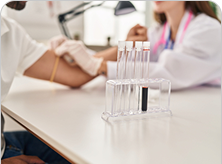
In-clinic assessment and blood draw
A first visit covers body composition goals, training history, recovery patterns and health background, alongside an in-person blood draw establishing your baseline hormonal and metabolic profile. No protocol is designed before that data is reviewed.
Physician review and protocol design
Your physician reviews the biomarker results and clinical picture to determine whether peptide therapy is appropriate and, if so, which compound or combination fits. There is no standard template. Dosing, frequency and cycle duration are individual.
Protocol and complementary strategy
The prescribed subcutaneous protocol is explained in full before you leave, including injection technique, schedule and what to monitor. Where clinically appropriate your physician will also discuss whether an IV nutrient strategy supports your goals during that phase.
Monitoring and adjustment
Follow-up tracks objective progress, meaning body composition and relevant lab markers, alongside how you feel in terms of energy, recovery quality and training performance. Protocols are adjusted on response rather than left to run.
1
In-clinic assessment and blood draw
Initial consultation evaluating fitness goals and health history, paired with baseline blood work to establish your hormonal and metabolic profile.

2
Physician Review and Protocol Design
Custom protocol tailored by your physician based on biomarker results and personal clinical needs – no standard templates.

3
Protocol and Complementary Strategy
Comprehensive guidance on injection schedule, technique, and monitoring, with optional IV nutrient therapy if clinically appropriate.

4
Monitoring and Adjustment
Ongoing tracking of lab markers, body composition, and performance to adjust protocols based on actual response.
Frequently Asked Questions
More general peptide therapy questions are answered separately. The ones below are specific to muscle growth and body composition.
Do peptides build muscle, and which are best for muscle growth?
Honestly, the framing needs adjusting slightly. Growth hormone secretagogues such as CJC-1295 and ipamorelin can increase GH and IGF-1 signaling, but clinical evidence demonstrating increased lean muscle in healthy adults is limited. They are not standalone muscle-building compounds and nothing in the published data suggests they work without resistance training and adequate protein. Tesamorelin carries the strongest evidence base of the group, though its trials measured visceral fat rather than muscle mass. For lean muscle outcomes specifically in healthy, non-deficient adults, the evidence is emerging rather than established.
Can peptides support both muscle growth and fat loss?
In principle yes, because growth hormone signaling acts on both sides at once, encouraging lean mass while supporting fat metabolism. In practice the effect is not guaranteed and varies considerably by individual, baseline hormonal status and how consistent the training and nutrition are. Anyone describing simultaneous recomposition as a predictable outcome is overstating what the data supports.
What is the difference between CJC-1295 and ipamorelin, and why are they combined?
They act on two different receptors. CJC-1295 mimics GHRH and provides the sustained signal for growth hormone release. Ipamorelin acts on the ghrelin receptor and triggers a selective pulse. Combined, they stimulate complementary parts of the same system, which may produce a larger response than either alone. Worth knowing that the synergy is established for the class of compounds rather than demonstrated for this specific pair in a trial.
Are peptides the same as steroids?
No. Growth hormone secretagogue peptides prompt your own pituitary to release more growth hormone. They do not introduce synthetic hormones or androgens and they do not suppress your own production. Anabolic steroids introduce synthetic testosterone-like compounds and bypass the regulatory system entirely. Different mechanisms, different risk profiles, different clinical uses. Both are prohibited in tested sport, so that is not a point of difference. We cover the comparison in more depth in a separate article on peptides versus steroids.
Are muscle building peptides safe?
Look, that depends entirely on which compound, which person and which pharmacy. Tesamorelin has a completed phase III safety dataset. CJC-1295 has short-duration trial data with no serious adverse reactions reported. BPC-157 and TB-500 have almost no human safety data at all. Growth hormone elevation can reduce insulin sensitivity across the whole class, which is why glucose gets monitored throughout rather than only at screening. And unregulated sourcing is a separate risk again, because purity and dose accuracy cannot be verified in grey market product.
Are these peptides allowed in competitive sport?
No. CJC-1295, ipamorelin, tesamorelin, BPC-157 and TB-500 all fall under WADA category S2, prohibited both in and out of competition. If you compete in any tested sport, say so at the consultation before anything else is discussed, because it changes the conversation entirely.
How are peptides administered, are they IV drips?
Body composition peptides at InVita are not IV drips. They are prescribed as subcutaneous home micro-injections, small and shallow, using a fine-gauge needle. InVita is the hub for assessments, blood work, consultations and monitoring. IV nutrient drips may be recommended separately as a complementary strategy, but they are a different intervention with a different purpose.
How long before anything changes?
Yeah, longer than most people expect. IGF-1 is retested at intervals your provider sets, rather than relying on subjective impressions, and the timing depends on the compound and the protocol. Body composition change is gradual. In the tesamorelin trials, which are the best documented in this article, the primary endpoint was measured at 26 weeks. Anyone promising visible results in a month is not describing this mechanism.
How do I know whether peptide therapy is right for me?
A clinical consultation is the only appropriate way to assess candidacy. Health history, medications, hormonal profile, body composition goals and relevant lab markers all feed into whether peptide therapy makes sense and, if so, which protocol. Two people with identical complaints can have entirely different lab pictures and entirely different appropriate answers. Self-assessment is not sufficient and self-prescribing is not safe.
Ready to Explore Your Options?
If the clinical picture described here sounds like yours, the next step is an evaluation rather than a decision made from an article. A consultation at InVita begins with health history and baseline bloodwork, and protocol recommendations follow that rather than precede it.
A consultation does not mean a peptide will be prescribed. Recommendations depend on medical history, examination, laboratory findings and the regulatory status of the therapy being considered.
Body composition work in midlife rewards continuity. Most of what is described here is assessed over months and adjusted on repeat bloodwork, and the supporting drips are priced as courses rather than single visits, so plan for a run of sessions rather than one. Book a consultation and bring any recent lab work with you.
InVita Wellness is a longevity and healthy aging destination in SoHo, New York City, now in its second decade, serving clients from Manhattan, Brooklyn, New Jersey and the surrounding commuter area.
Explore peptide therapy & Athletic Performance IV drip
contact InVita Wellness today
Book Now
456 Broadway 2 Floor, New York, NY 10013, USA
This article is intended for educational purposes only. It does not constitute medical advice, a diagnosis, or a treatment recommendation. Individual circumstances vary. All clinical decisions should be made in consultation with a qualified physician following appropriate assessment.
References
- Growth Hormone and Aging. Endotext. NCBI Bookshelf, National Institutes of Health.
[NCBI]
- Teichman SL, Neale A, Lawrence B, Gagnon C, Castaigne JP, Frohman LA. Prolonged stimulation of growth hormone (GH) and insulin-like growth factor I secretion by CJC-1295, a long-acting analog of GH-releasing hormone, in healthy adults. J Clin Endocrinol Metab. 2006;91(3):799-805. PMID: 16352683
[PubMed]
- Raun K, Hansen BS, Johansen NL, et al. Ipamorelin, the first selective growth hormone secretagogue. Eur J Endocrinol. 1998;139(5):552-561. PMID: 9849822
[PubMed]
- Beck DE, Sweeney WB, McCarter MD; Ipamorelin 201 Study Group. Prospective, randomized, controlled, proof-of-concept study of the ghrelin mimetic ipamorelin for the management of postoperative ileus in bowel resection patients. Int J Colorectal Dis. 2014;29(12):1527-1534. PMID: 25331030
[PubMed]
- Sigalos JT, Pastuszak AW. The safety and efficacy of growth hormone secretagogues. Sex Med Rev. 2018;6(1):45-53. PMID: 28400207
[PubMed]
- Falutz J, Allas S, Blot K, et al. Metabolic effects of a growth hormone-releasing factor in patients with HIV. N Engl J Med. 2007;357(23):2359-2370. PMID: 18057338
[PubMed]
- Vasireddi N, Hahamyan H, Salata MJ, et al. Emerging use of BPC-157 in orthopaedic sports medicine. A systematic review. HSS J. 2025. PMID: 40756949
[PubMed]
- Goldstein AL, Hannappel E, Kleinman HK. Thymosin beta4: actin-sequestering protein moonlights to repair injured tissues. Trends Mol Med. 2005;11(9):421-429. PMID: 16099219
[PubMed]
- EGRIFTA (tesamorelin for injection) Prescribing Information. U.S. Food and Drug Administration.
[FDA]
- July 23-24, 2026 Meeting of the Pharmacy Compounding Advisory Committee. U.S. Food and Drug Administration.
[FDA]